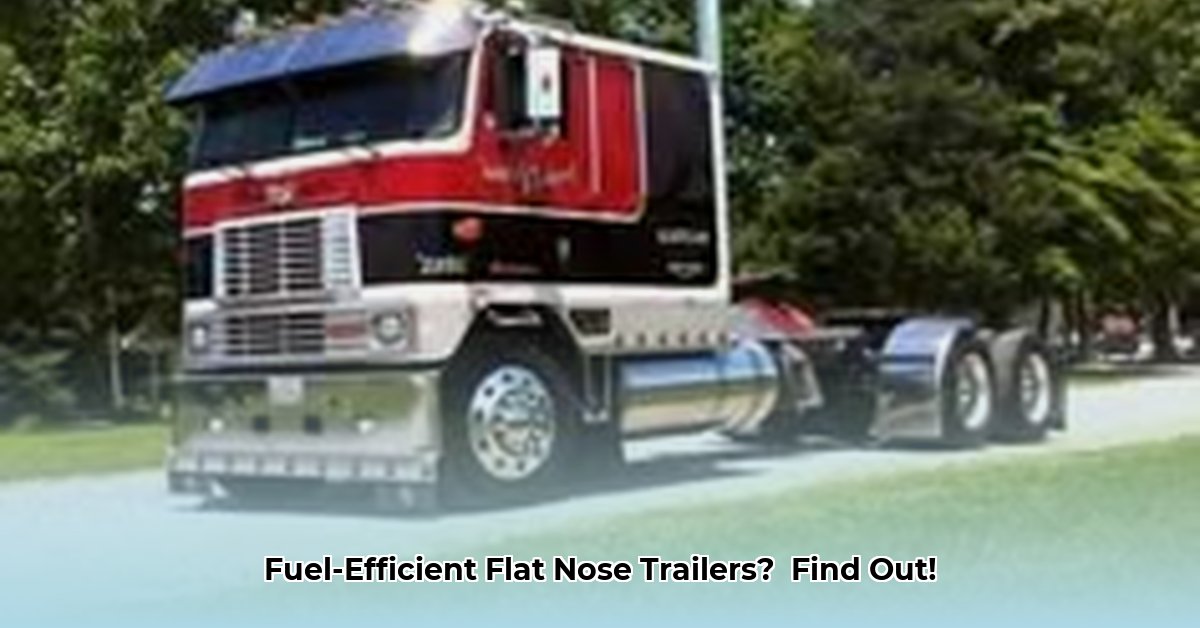
Choosing between a flat-nose and a V-nose enclosed cargo trailer involves careful consideration of several factors. This guide offers a comparative analysis to help you make an informed decision, focusing on fuel efficiency and other key aspects. For more information on standard trailer sizes, see this helpful resource.
Space and Capacity: The V-Nose Advantage
V-nose trailers typically offer greater interior space due to their sloped front. This extra room is particularly beneficial for hauling oversized or bulky items. However, this increased capacity comes at a cost, as we will see. How much extra space are we talking about? The difference can be substantial, often adding several cubic feet of storage depending on the trailer's dimensions. This translates to the ability to transport more cargo per trip, potentially offsetting increased fuel costs.
Aerodynamics: Flat-Nose's Fuel Efficiency Edge
Flat-nose trailers generally exhibit superior aerodynamics. Their streamlined design minimizes wind resistance, resulting in better fuel economy. This is particularly noticeable during long-haul trips. Conversely, the pointed front of a V-nose trailer can increase drag, leading to higher fuel consumption, especially at highway speeds. The difference in fuel efficiency can be significant, impacting your overall operational costs.
Fuel Efficiency: A Detailed Comparison
While the initial purchase price of both trailer types is often similar, long-term fuel costs can vary considerably. The improved aerodynamics of a flat-nose trailer directly translate to lower fuel bills over time. However, the increased cargo capacity of a V-nose might make it a more practical choice for specific hauling needs, even with potentially higher fuel expenses. The true cost savings will depend on several variables, including average trip distance, driving habits, and the types of loads being transported.
Cost Analysis: Beyond the Initial Investment
The total cost of ownership extends beyond the initial sticker price. Consider these factors when comparing flat-nose and V-nose trailers:
- Fuel Consumption: As discussed, flat-nose trailers typically offer better fuel economy.
- Maintenance: Both trailer types require regular maintenance, but potential wear and tear might differ slightly affecting long-term costs.
- Resale Value: The resale value of a trailer is affected by several factors, including condition, age and type.
A thorough cost-benefit analysis, considering all these facets is crucial before making a final decision.
Making the Right Choice: A Decision Matrix
The best trailer for you depends entirely on your specific hauling requirements.
| Feature | Flat Nose Trailer | V-Nose Trailer | Considerations |
|---|---|---|---|
| Interior Space | Smaller | Larger | Prioritize space for oversized or bulky loads? |
| Aerodynamics | Excellent; minimizes wind resistance | Less efficient; increased wind resistance | Long-distance hauling? Fuel economy a critical factor? |
| Fuel Efficiency | Higher; lower fuel costs over time | Lower; higher fuel costs over time | How often do you tow and over what distances? |
| Initial Cost | Generally comparable | Generally comparable | Budget constraints? |
| Long-Term Cost | Potentially lower due to fuel savings | Potentially higher due to fuel consumption | Weigh fuel costs against the value of increased cargo space. |
Other Crucial Factors
Beyond fuel efficiency and space, consider these additional factors:
- Build Quality: Durable materials and robust construction ensure longevity.
- Weight Capacity: Ensure the trailer's weight rating aligns with your towing vehicle's capabilities. Overloading is dangerous.
- Maneuverability: V-nose trailers, sometimes due to longer wheelbases, can be less maneuverable in tight situations.
- Warranty: A comprehensive warranty protects your investment.
Choosing Your Trailer: A Step-by-Step Guide
- Assess your hauling needs: What will you transport? How often? How far?
- Set a realistic budget: Account for the initial purchase price and ongoing operational costs.
- Compare specifications: Analyze weight capacity, dimensions, axle type, and tire type.
- Prioritize key features: Determine which aspects are most important for your use case.
- Seek professional advice: Consult with experienced haulers or trailer specialists.
Remember, the decision isn't merely about flat-nose versus V-nose; it's about finding the perfect balance of capacity, fuel efficiency, and cost-effectiveness to meet your individual requirements.